
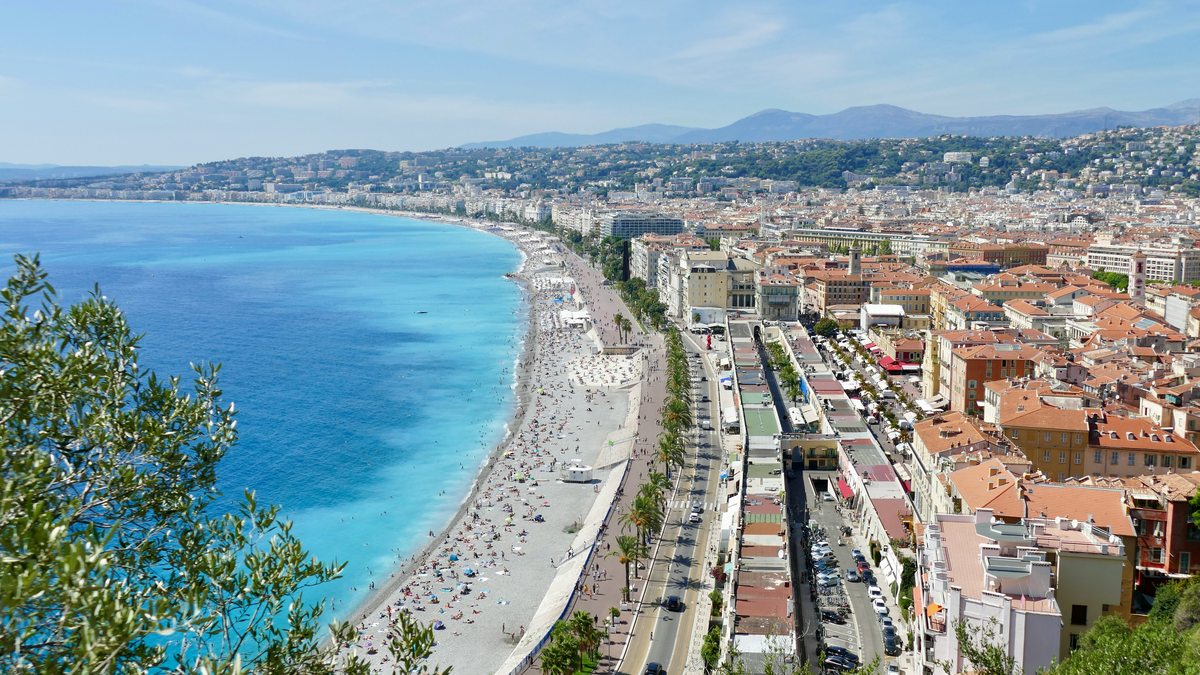
There are cities you think you know before you visit. Nice is one of them. You picture the Promenade, the blue sea, the rosé — and then you arrive, and realise the postcard barely scratched the surface. The real Nice — its baroque backstreets, its flower-scented morning markets, its strict culinary traditions and its position as gateway to the entire Côte d'Azur — is something else entirely. For summer 2026, here is how to experience it properly.
Why Nice this summer: the numbers that make the case
300 days of sunshine per year. Not a marketing claim — a meteorological record kept since 1873. In July, Nice averages 11 hours of sunshine a day and a temperature of 28°C. The Mediterranean reaches 24–25°C. For guaranteed sun anywhere in France, nothing comes close.
Nice is also one of the best-connected cities in the country: France's third-busiest airport (15.2 million passengers in 2024), a TGV station with direct trains to Paris in 5h30, Lyon in 4 hours, Marseille in 2h30. Getting here is easy, from almost anywhere.
And Nice is a genuinely complete destination. Beach, culture, food, nightlife, day trips — all within a few kilometres of each other. Before diving in: Nice is best explored on foot, but not with 15kg on your back. Dropping your bags at 24/7 automatic luggage storage in Nice on arrival — like OHLALA Lockers, 29 rue Gounod, 6 minutes' walk from Nice-Ville station, lockers S, M and XL — transforms the whole day. Hands-free, you move freely: beach, Old Nice, terrace, hilltop. Your access code arrives by SMS within seconds of booking.
The beaches of Nice — what to know before you go
The beaches of Nice are pebble beaches — a detail that surprises visitors expecting fine sand. But Nice's galets are worth discovering: the water is extraordinarily clear (the limestone seabed produces that distinctive blue-green colour), and the beaches stay naturally clean.
The public beaches stretch for nearly 4 kilometres along the Promenade des Anglais. Free, accessible, animated. For the best spots, head slightly east, past the Colline du Château: the Coco Beach and the Réserve area are the local favourites — less crowded, clearer water, more relaxed atmosphere.
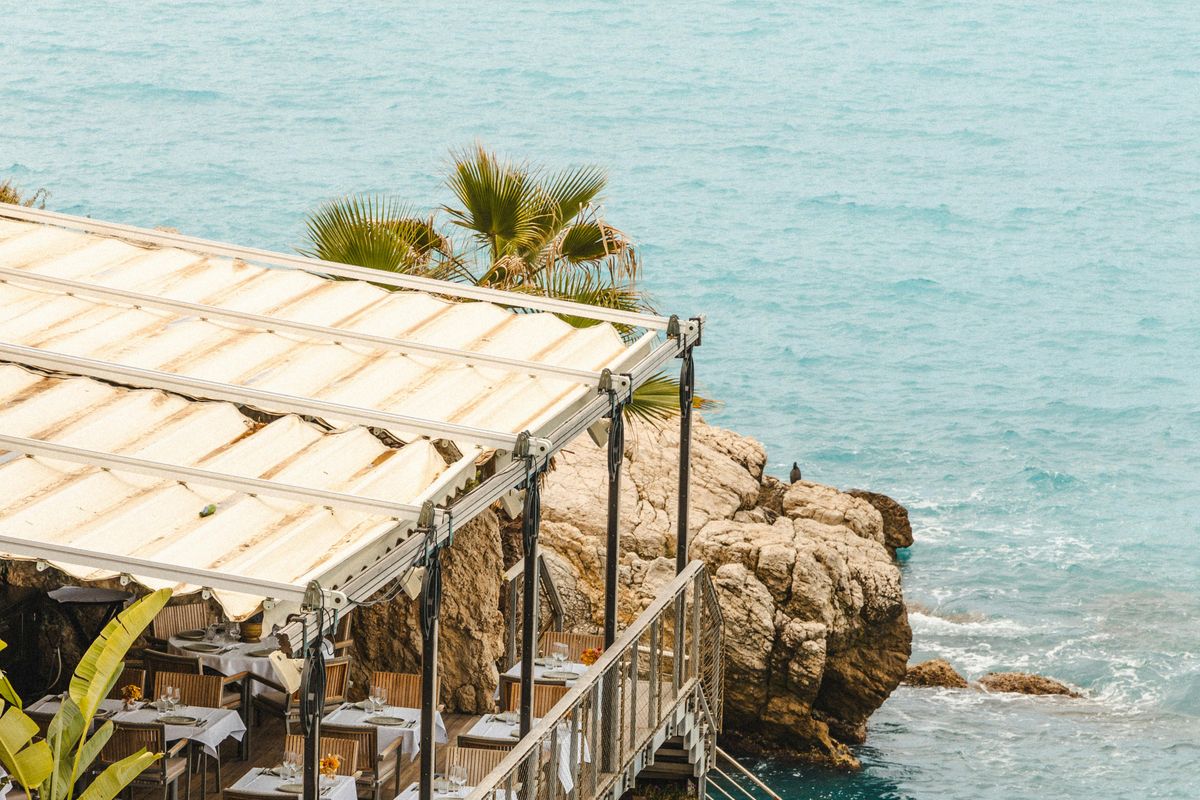
Private beaches offer sunbeds and parasols for €18–25 per person in high season. Some include a drink. The upside: showers, changing rooms, a bar and food right on the shore. Le Castel Plage, at the foot of the Colline du Château, has one of the most spectacular views on the entire Promenade.
The trick: in July and August, beaches are packed from 10am to 6pm. Go before 9am (magical light, almost no one around) or after 5pm (warm sea, golden light, mellow atmosphere). Same sea, ten times fewer people.
Old Nice (Vieux-Nice): the real Mediterranean soul
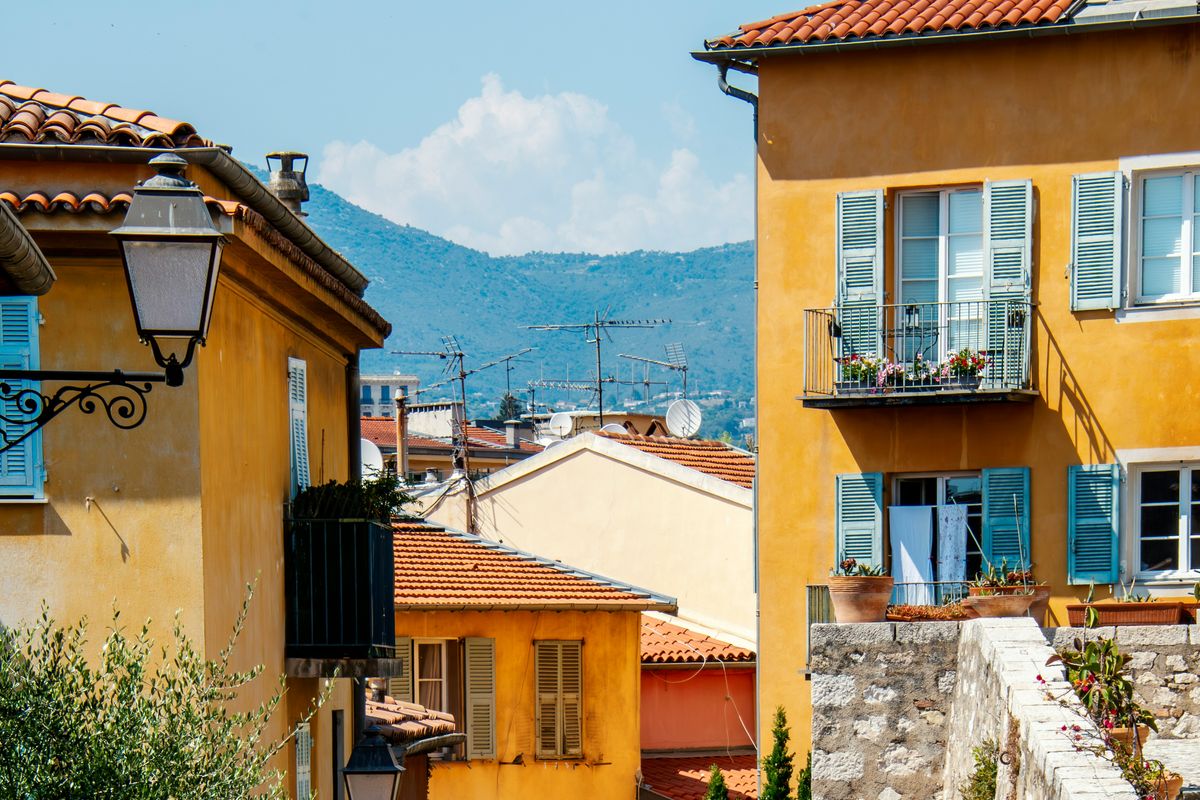
This is the heart of Nice — its baroque, working-class soul. A labyrinth of cobbled alleyways with terracotta and ochre façades, built in the 17th and 18th centuries in the Piedmontese style, with architectural trompe-l'œils, marble doorways and cooking smells drifting through open windows.
In the morning, the Cours Saleya is the most beautiful flower and vegetable market on the Côte d'Azur. Mounds of roses, carnations and lavender stacked in colourful pyramids. Local producers sell their tomatoes, goat's cheese from the Mercantour and marinated olives. Get there early (before 9.30am), stop, taste what's offered, drink a coffee on the terrace. This is Nice in the morning.
Place Rossetti is the centre of gravity of Old Nice. Dominated by the Cathédrale Sainte-Réparate (17th-century baroque), surrounded by cafés and restaurants. This is where you'll find Fenocchio — a legendary ice cream parlour since 1966, with 94 flavours including lavender, violet, rosemary, olive oil and beer. The queue can be long. It's worth it.
The Niçois nickname for the Old Town is the Babazouk — derived from the Arabic bab el-souk (the market gate). A name that tells, in itself, the Mediterranean history of this city open to every culture.
Niçois cuisine: a food culture with its own rules
Nice is not a city where you eat Provençal cuisine. Niçois cuisine is a culinary tradition in its own right, with its own rules, its own iconic dishes and its own guardians.
The socca is the undisputed star. A thin pancake made from chickpea flour, baked in a wood-fired oven in a large copper dish, served piping hot and peppered to order. You eat it standing up, in the market, in irregular pieces cut on the spot. The golden rule: only order socca when it comes out of the oven. Cold, it's nothing. At Chez Thérésa on Cours Saleya — an institution since the 1920s — it's the definitive version.
The pan bagnat is the Niçois sandwich — the authentic one. A round bread roll rubbed with garlic and soaked in olive oil, filled with tuna, hard-boiled egg, tomatoes, peppers, black olives and anchovies. No butter, no mayo. A Confédération du pan bagnat niçois exists to enforce the recipe. Yes, really.
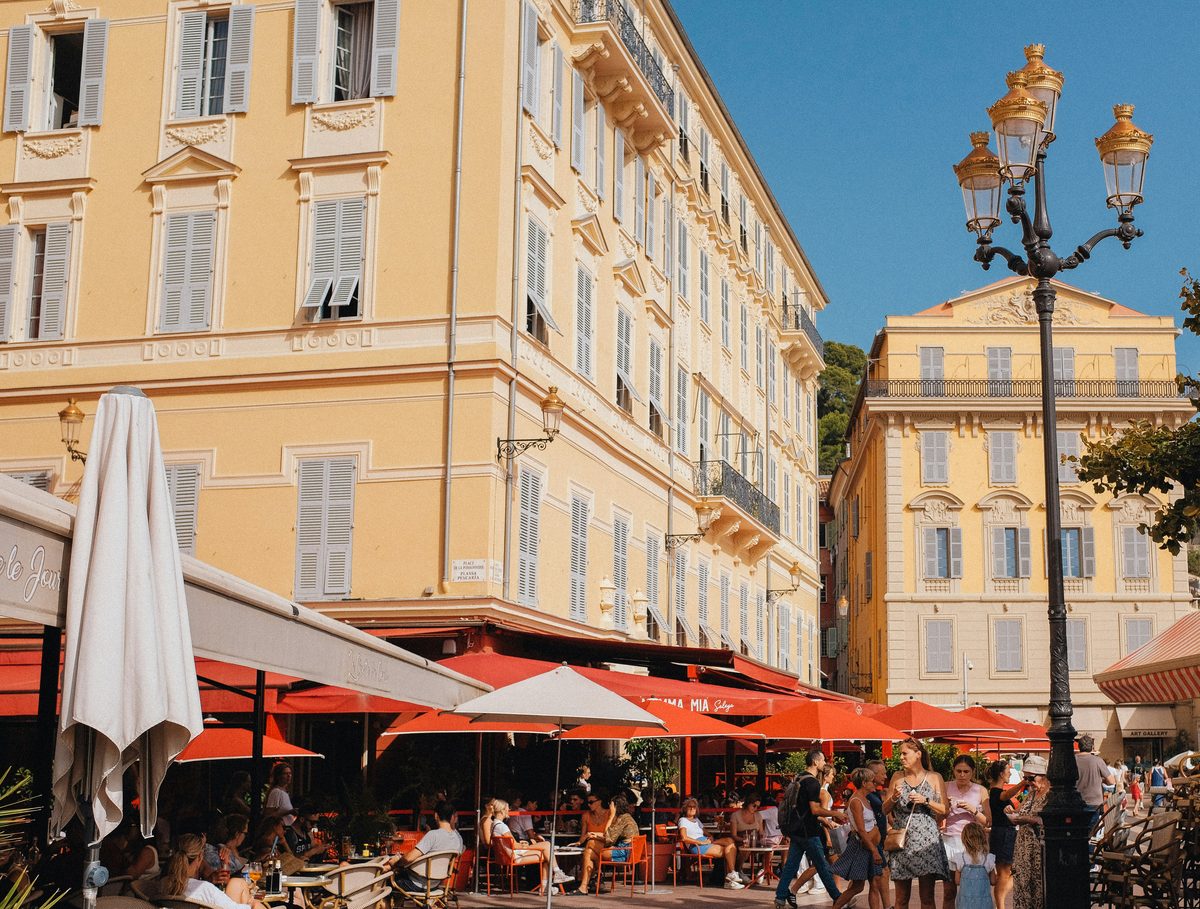
For an honest meal in Nice: avoid the restaurants directly lining Cours Saleya (tourist traps, poor value) and walk a couple of streets into the backstreets of Old Nice. La Merenda (4 rue Raoul Bosio) — a tiny counter with a handful of tables, no sign, no card payment, reservations in person only — is the most authentic address in the city for true Niçois cooking.
The must-sees: the short but honest list
The Colline du Château (free, always open). From this 92-metre promontory between the sea and the port, the panorama over the Baie des Anges and the Promenade des Anglais is the finest in Nice. Reach it on foot from Old Nice (15 minutes of steps) or by the free lift at the end of the Promenade. Watching the sunrise from here is an experience in itself.
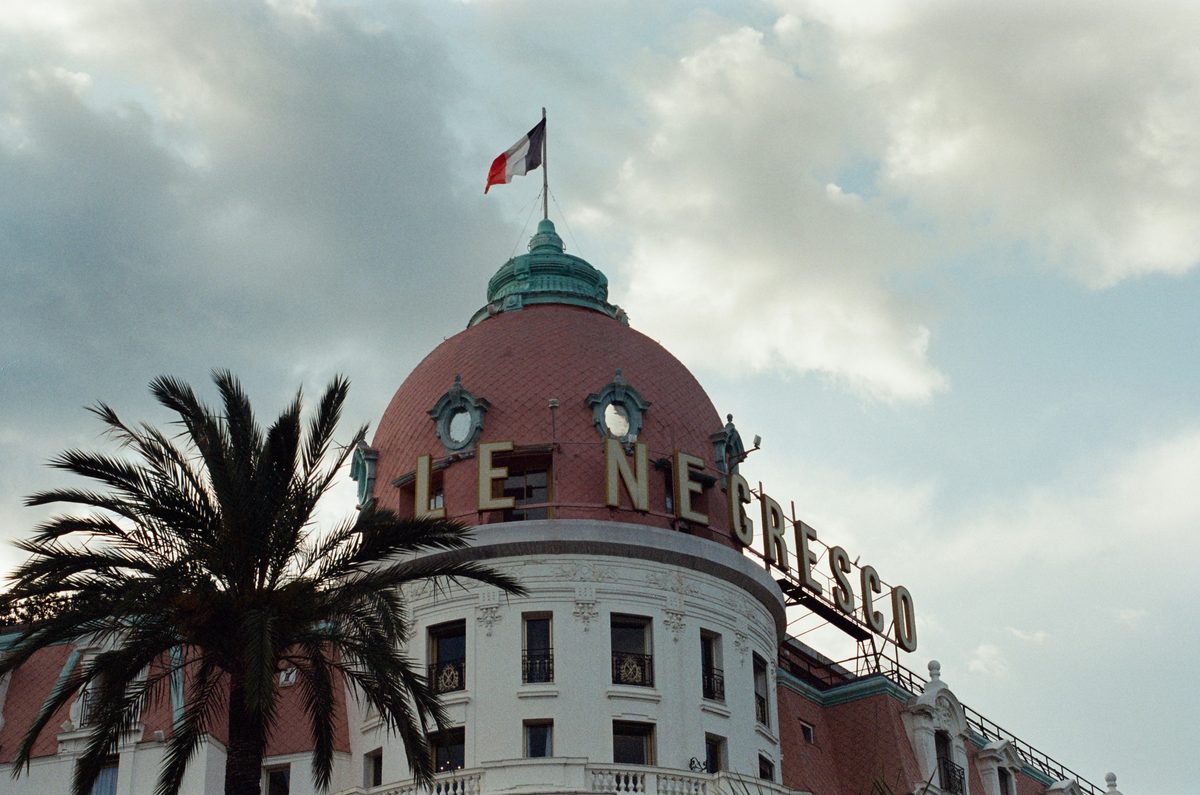
The Promenade des Anglais. Seven kilometres between the sea and Belle Époque palaces. Walk it or cycle it (the city's Vélo Bleu bikes are available to hire by the day). The Hôtel Negresco (1913), with its pink dome and interior art collection, is open to the public in its lobby — no one will ask why you've come in, if you just want to admire the décor.
The Musée Matisse (Cimiez, free on the first Sunday of the month). Henri Matisse arrived in Nice in 1917. He never really left, and worked here until his death in 1954. The museum, set in a 17th-century Genoese villa in a park of olive trees, holds one of the world's largest collections of his work.
The Nice Jazz Festival (July). Founded in 1948 — one of the oldest jazz festivals in Europe — it takes place partly at the Arènes de Cimiez, 2nd-century Roman ruins. Jazz in an open-air ancient amphitheatre, under the Nice light. Some concerts are free.
Day trips from Nice: everything within reach by train
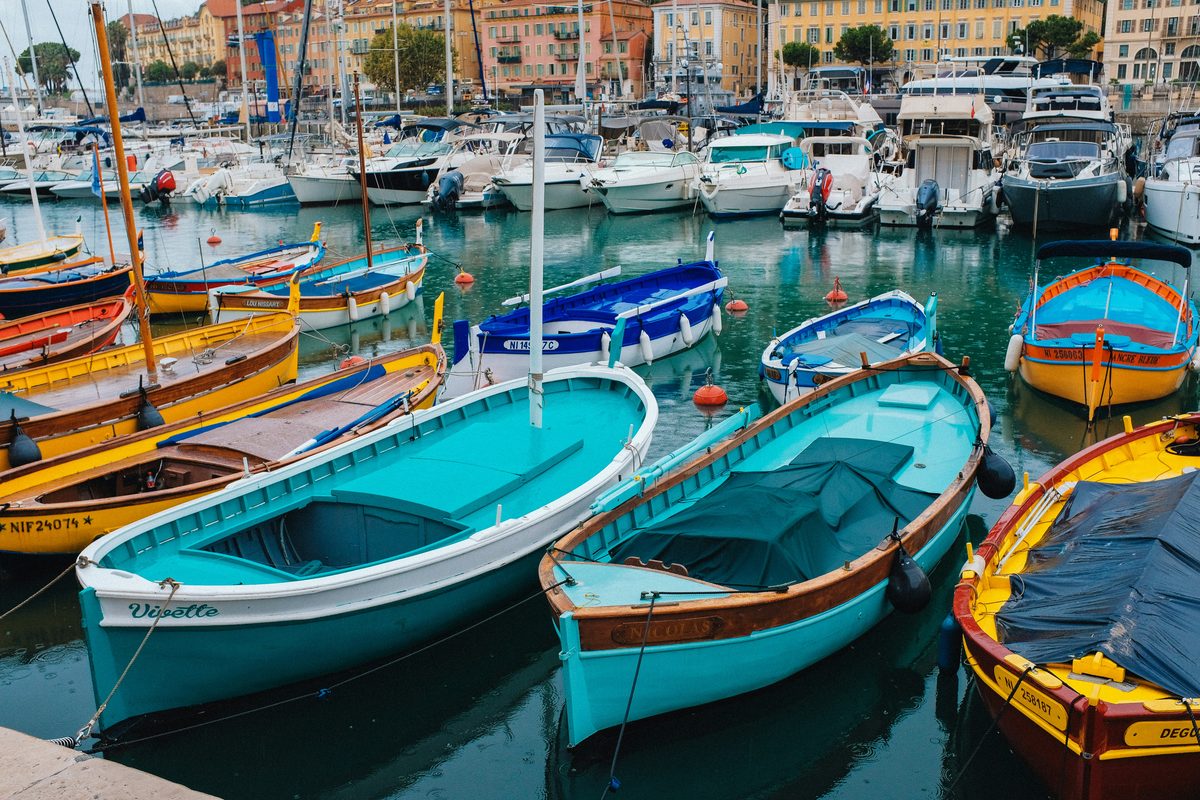
This is one of Nice's great advantages: it is a perfect base from which to explore the entire Côte d'Azur, without a car.
Monaco: 20 minutes by train. The Rock, the Princely Palace, the Casino de Monte-Carlo (the building is worth the detour even without gambling), the harbour full of superyachts. Train fare: €3.80.
Villefranche-sur-Mer: 10 minutes by train. One of the most beautiful natural harbours in the Mediterranean. A colourful old town, the Chapelle Saint-Pierre decorated by Jean Cocteau, turquoise waters ideal for snorkelling. For families, it's often the best beach of the entire trip.
Èze: a medieval village perched at 429 metres, connected to Èze-sur-Mer station by the Sentier Nietzsche (45 minutes of cliff-side walking — the philosopher loved this path and said he found the inspiration for Zarathustra here). The view over the Mediterranean from the summit is vertiginous.
Menton: 40 minutes by train. The last town before Italy. Pastel architecture, extraordinary gardens, lemons everywhere. One of the gentlest, most beautiful towns on the entire coast.
Practical tips for a hassle-free summer
Budget: Nice works for every budget. The Cours Saleya market lets you put together a full lunch for under €10 (socca + fruit + cheese). Municipal museums are free for under-18s, and on the first Sunday of the month for everyone. Public transport costs €1.70 per journey — including to Monaco.
Getting around: the tram (lines T1 and T2) covers most tourist areas and connects the airport to the city centre in 25 minutes directly. Lignes d'Azur buses serve Monaco, Villefranche and Antibes without changing. Avoid driving in the city centre in summer — parking is scarce and expensive.
Accommodation: the Old Nice or Port area for atmosphere (noisy in the evenings). The Musiciens district for quiet and convenience — this is also where OHLALA Lockers is based. Around the station for budget options. Book early for July and August — Nice regularly sells out from May.
Travelling without your bags: Nice is best explored on foot. Between Nice-Ville station and the sea, it's less than 20 minutes. For those arriving with luggage who want to dive into the city immediately — without dragging suitcases across Old Nice's cobblestones or under the heat of the Promenade — automatic lockers are available in the centre, open 24/7, a few steps from the station. Hands-free is the prerequisite for truly appreciating Nice.
What is the best time to visit Nice?
June and September are the ideal months: warm sea (22–24°C), maximum sunshine, more manageable crowds than July–August. July and August are still excellent but beaches and restaurants are very busy. Nice is also pleasant off-season thanks to its mild Mediterranean climate — it rarely drops below 10°C even in January.
How do you get from Nice to Monaco without a car?
The TER regional train is the simplest and cheapest option: 20 minutes, €3.80, departures every 30 minutes from Nice-Ville station. No reservation needed — just buy a ticket at the platform. Avoid driving to Monaco: parking is expensive, limited and stressful.
Are there free beaches in Nice?
Yes. The public beaches are free and stretch for 4 kilometres along the Promenade des Anglais. They are pebble beaches — bring water shoes or hire a pair on-site. Private beaches (€18–25 per person) offer sunbeds, parasols, showers, bars and restaurant service alongside them.
Where can I store my luggage in Nice to explore hands-free?
OHLALA Lockers, 29 rue Gounod, Musiciens district, offers automatic lockers S, M and XL, open 24/7 every day of the year including public holidays. Six minutes' walk from Nice-Ville station — the ideal solution for dropping your bags on arrival and exploring Nice completely hands-free. Book online in 2 minutes, access code sent by SMS.
Is the Promenade des Anglais worth visiting?
Absolutely — but at the right time. Avoid midday in high summer (heat and crowds). The Promenade is magical early in the morning (7–9am, golden light, almost no one around) or in the late afternoon from 5pm for the sunset over the Baie des Anges. Seven kilometres: walk it, cycle it, or simply sit and watch the sea.
Nice is not a backup destination. It is a first-choice destination — one that simply has the elegance not to need to boast about it. 300 days of sunshine, an improbably blue sea, a baroque old town that's still very much alive, a food culture with its own rules and its own pride. And all around it: Monaco, Villefranche, Èze, Menton — all within reach by train. Summer 2026 in Nice: book it. You'll thank yourself later.
